

Stable Isotope-Labeled Peptides: Verifying Isotopic Purity
An overview of stable isotope-labeled research peptides, their role as internal standards in mass spectrometry, ...
Read note ›
Retention Samples: Why Peptide Suppliers Keep Reserve Batches
An explanation of what retention (reserve) samples are, why disciplined research reagent suppliers keep them, an...
Read note ›
Out-of-Specification (OOS) Investigations in Peptide Testing
An out-of-specification (OOS) result is a documented deviation from expected test values, and how a testing labo...
Read note ›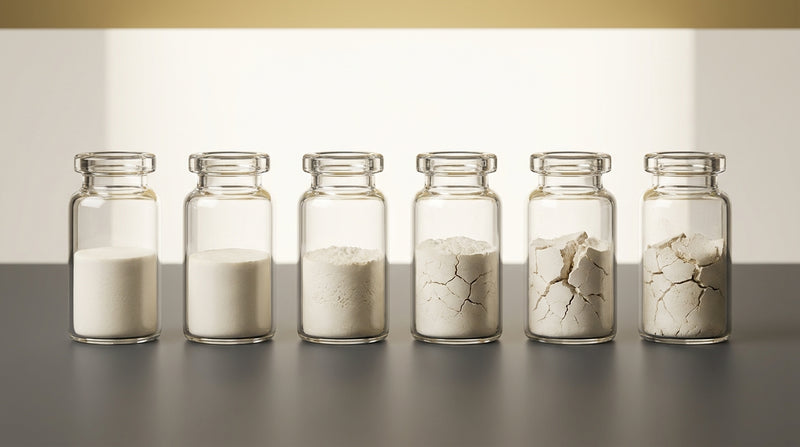
Visual Inspection of Lyophilised Peptide Cake Appearance
What cake structure, color, and texture reveal about a lyophilised research peptide vial, and which visual defec...
Read note ›
Acceptance Sampling for Research Peptide Batch Verification
An explanation of acceptance sampling statistics and how they determine how many vials from a peptide lot are te...
Read note ›
Analytical Effects of PEGylation, Glycosylation, and Lipidation
PEGylation, glycosylation, and lipidation are structural modifications that change a research peptide's mass, po...
Read note ›
Custom vs Catalog Research Peptides: What to Verify Before You Order
A comparison of custom-synthesis and catalog research peptides, covering the documentation, lead time, and verif...
Read note ›
pH Meter Calibration and Buffer Verification for Peptide Research
A practical guide to pH meter calibration and buffer verification in peptide research settings, covering electro...
Read note ›
Water Activity vs Moisture Content in Lyophilized Peptide Storage
Water activity and percent moisture measure different things in lyophilised research peptides. This article expl...
Read note ›
Micropipette Calibration for Research Peptide Laboratories
Explains why regular gravimetric calibration of micropipettes matters for research peptide work, and how ISO 865...
Read note ›